
Step-by-Step EAN-13 Standard Barcode Creation Guide
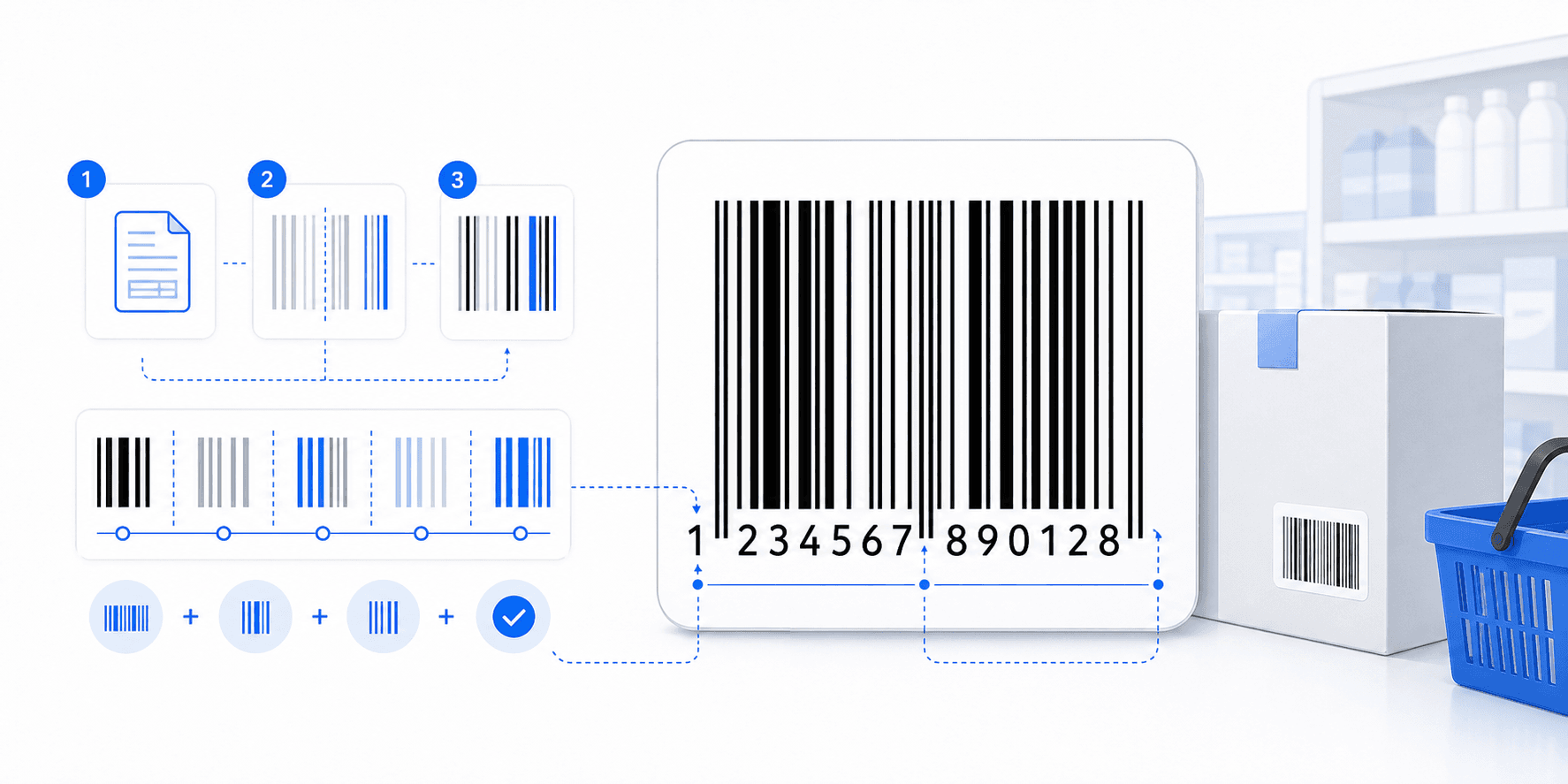
The EAN-13 (International Article Number) stands as the absolute foundation of the physical retail checkout supply chain. Printed on virtually billions of consumer items worldwide, this standard symbology allows grocery checkout lasers and sorting machinery to instantly pull product pricing, brand identification, and categorizations from internal databases.
1. Decoding the EAN-13 Structural Architecture
An EAN-13 barcode does not contain raw pricing variables or store info. Instead, it serves as a flat 13-digit identification pointer structured into four strict zones:
- Country Identifier (First 3 digits): Defines the regional GS1 organizational branch office where the brand owner registered. For example, prefixes between 890 indicate registrations within GS1 India.
- Manufacturer Prefix (Next 4 to 6 digits): Unique sequence assigned to specific brands, ensuring products maintain separate identification codes globally.
- Product Number (Next 3 to 5 digits): Allocated directly by the manufacturer to identify individual sizes, variations, or flavors.
- Modulo-10 checksum (Terminal 13th digit): Validation checker used to confirm optical laser scan authenticity.
2. Calculating the Checksum Modulo-10 Digit Math
Before a barcode is printed, scanners cross-check the terminal digit mathematically to ensure no distortion occurred. To calculate this checksum manually:
- Take the first 12 digits of the code sequence.
- Sum the numbers at odd positions (1st, 3rd, 5th, etc.) and multiply the sum by 1.
- Sum the numbers at even positions (2nd, 4th, 6th, etc.) and multiply the sum by 3.
- Sum these two totals together.
- The check digit is the smallest value required to raise this grand sum to the nearest multiple of 10.
Example: Input "400638133393" sum is 89. Raising to the nearest multiple of 10 (90) requires adding 1. Thus, the full EAN-13 code is "4006381333931". Our online generator automates this calculation for you.
3. Requirements to Print and Sell on Retail Shelves
If you intend to distribute product boxes across physical commercial grocery outlets, you must license official barcodes directly from GS1. Using random fake barcodes on supermarket shelves will lead to scanning conflicts at cash registers and potential logistical fees. However, you are free to generate any barcode series for private catalogs, staff inventory, or personal tracking sheets.
Need to print and export custom barcodes?
Compile bulk CSV spreadsheets or single assets for packaging layouts using our 100% free offline algorithms.
Frequently Asked Questions
Yes. EAN-13 barcodes include Human Readable Interpretation (HRI) numerical digits printed below the barcode sequence so cashiers can enter codes manually if an optical laser scanner fails.
The official recommended baseline size (100% scale) of an EAN-13 barcode is 37.29mm wide by 25.93mm high, with a minimum allowed scale factor limit of 80% to ensure scanning reliability.