
Core Symbology Breakdown: Linear Barcodes vs 2D QR Codes
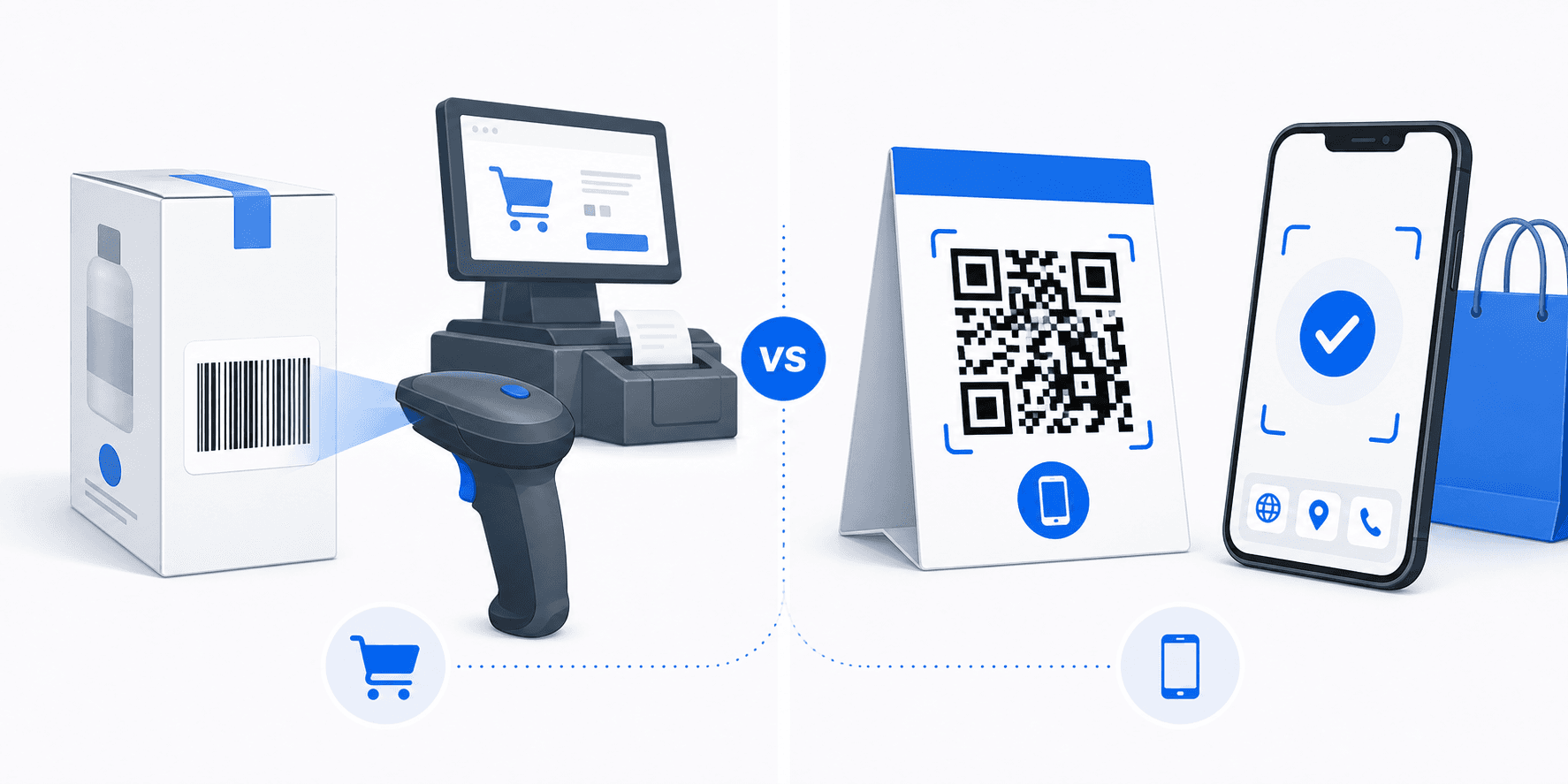
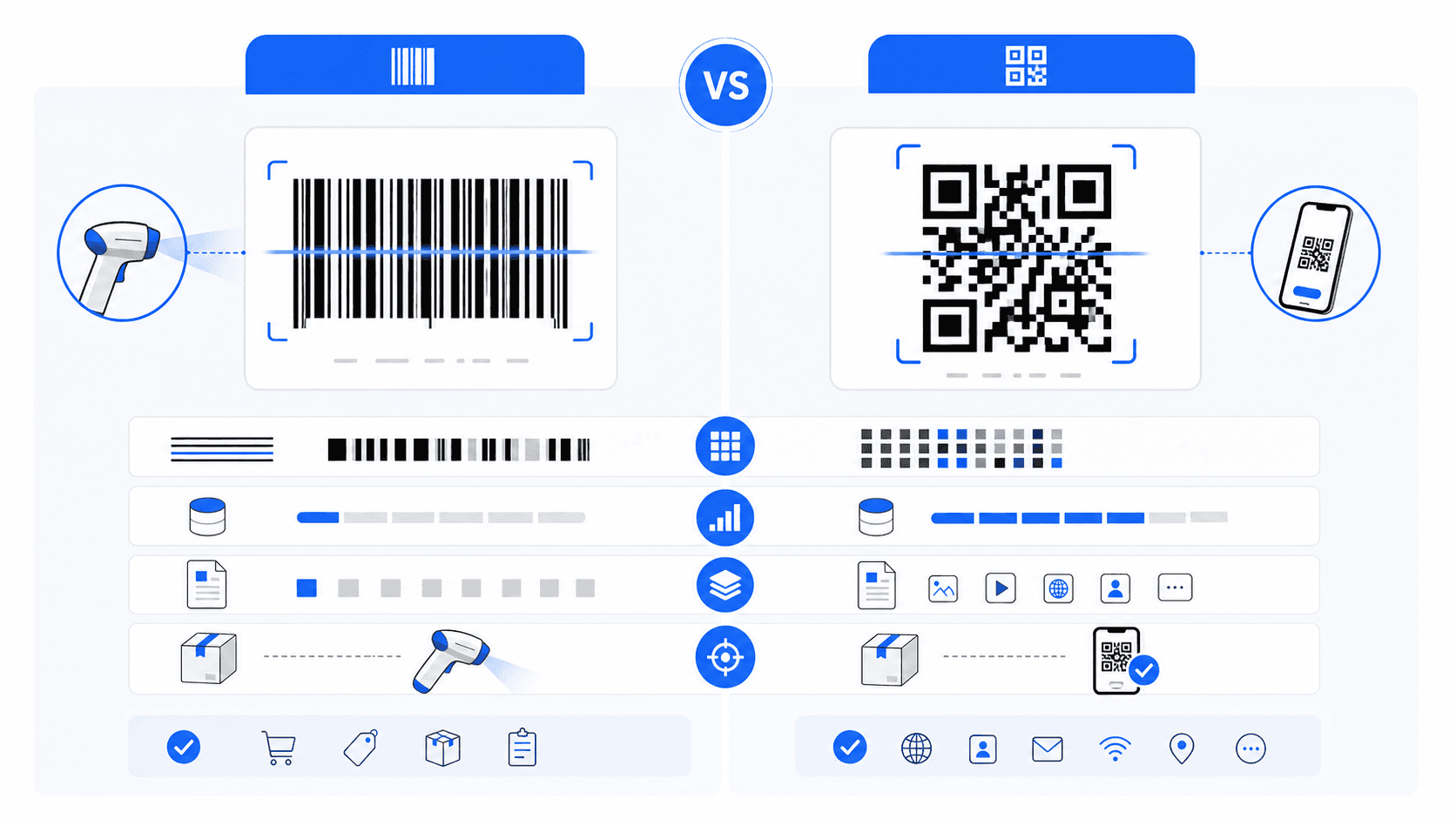
Choosing between linear barcodes (such as EAN-13, Code 128) and two-dimensional matrix symbols like QR codes defines how user cameras or optical lasers read your assets. Here, we outline the structural and capability differences between the two formats:
1. One-Dimensional (1D) Linear Barcoding
Standard 1D barcodes encode alphanumeric keys horizontally using alternating thick and thin spacing modules.
- Data capacity limits: 1D barcodes generally hold between 10 to 30 characters. High counts force the barcode to stretch wider, which can make them difficult to scan of product layouts.
- Laser scanning speeds: Highly optimized for laser POS scanners. These scanners read vertical light reflections across horizontal bars, making them incredibly fast at cash registers.
2. Two-Dimensional (2D) QR Code Matrix Standard
QR codes encode data both vertically and horizontally in a grid of square blocks, increasing information density.
- Massive storage capacity: Can hold up to 7,089 numeric values or 4,296 alphanumeric characters in a single matrix. This allows you to write entire website links, WiFi security SSID parameters, or email subject layouts.
- 360-Degree Readability: Three visual target corners allow scanners and smartphones to capture and align codes at any rotation angle instantly.
3. Choosing the right standard for your workflow
Use standard linear barcodes if you are printing retail tags for cash registers or logistics shipping cards for warehouse laser scanners. Choose QR codes if you are directing customer cameras to website links, menu sheets, vCards, or digital downloads.
Need to print and export custom barcodes?
Compile bulk CSV spreadsheets or single assets for packaging layouts using our 100% free offline algorithms.
Frequently Asked Questions
Yes. Modern mobile device cameras are optimized for 2D matrix layouts. They detect positioning corners to normalize and read the encoded payload instantly, even under low-contrast lighting.
Absolutely. Many shipping packages feature an EAN/GS1 barcode for warehouse tracking and a QR code directing customers to tracking updates or support portals.